
The Collector’s Guide
From perpetual calendars to tourbillons, explore watch movements and the language of fine watchmaking.
More Than a Watch
A watch is defined by more than its dial. How it stores energy, regulates time and displays information gives it character. This guide introduces the vocabulary of watchmaking in plain language.
Movement Essentials
What is a calibre?
Calibre is another word for a watch movement, and often the name or number assigned to a particular movement design or family. A watch reference and its calibre designation are not the same thing.
Manual winding and automatic winding
Both are mechanical systems powered by a mainspring. A manually wound watch is charged using its crown. In an automatic watch, wrist motion moves a rotor that operates the winding system. An automatic watch can stop when left unworn after its stored energy runs out.
Power reserve
The approximate time a fully wound movement can run without further winding. A 70-hour power reserve describes stored running time, not accuracy. Usage conditions and additional functions can affect the actual duration.
Escapement and balance
The escapement releases energy from the gear train in controlled steps and supplies impulses to the balance. The balance and balance spring form the regulating system. Together, these components turn stored energy into a controlled indication of time.
Inside the Movement: Key Components
The crown and rotor load energy; the mainspring stores it. The barrel and gear train transmit it, while the escapement and balance system regulate the timing.
The following component illustrations explain basic ideas. They are not scale assembly drawings or technical drawings of a specific calibre.
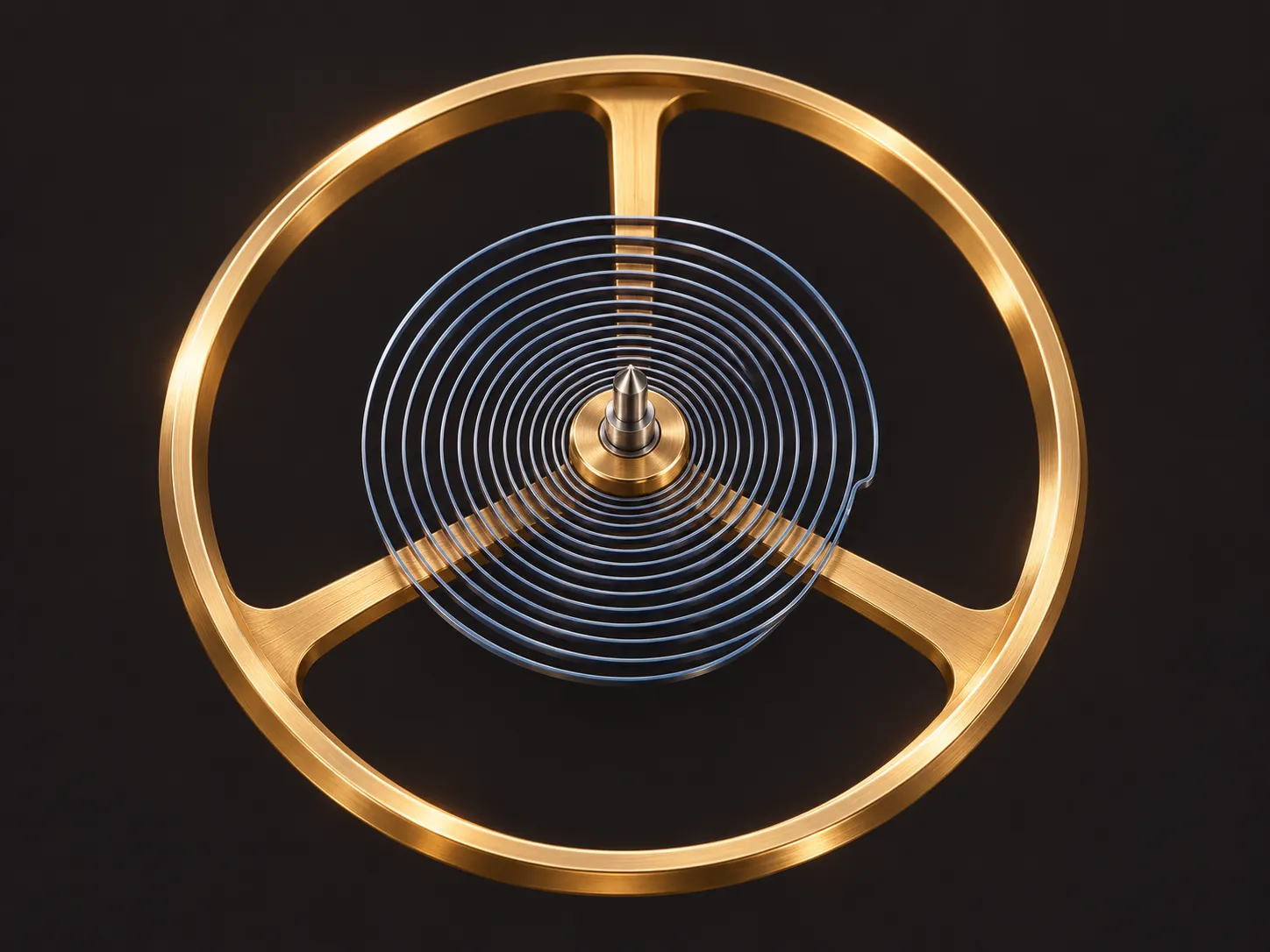
Balance wheel and hairspring
Role: Oscillate back and forth to regulate the rhythm of a mechanical watch.
The balance wheel works with a very fine spiral hairspring. The large gold ring represents the wheel; the thin spiral represents its spring. This regulating spring is different from the mainspring that stores the watch’s energy.
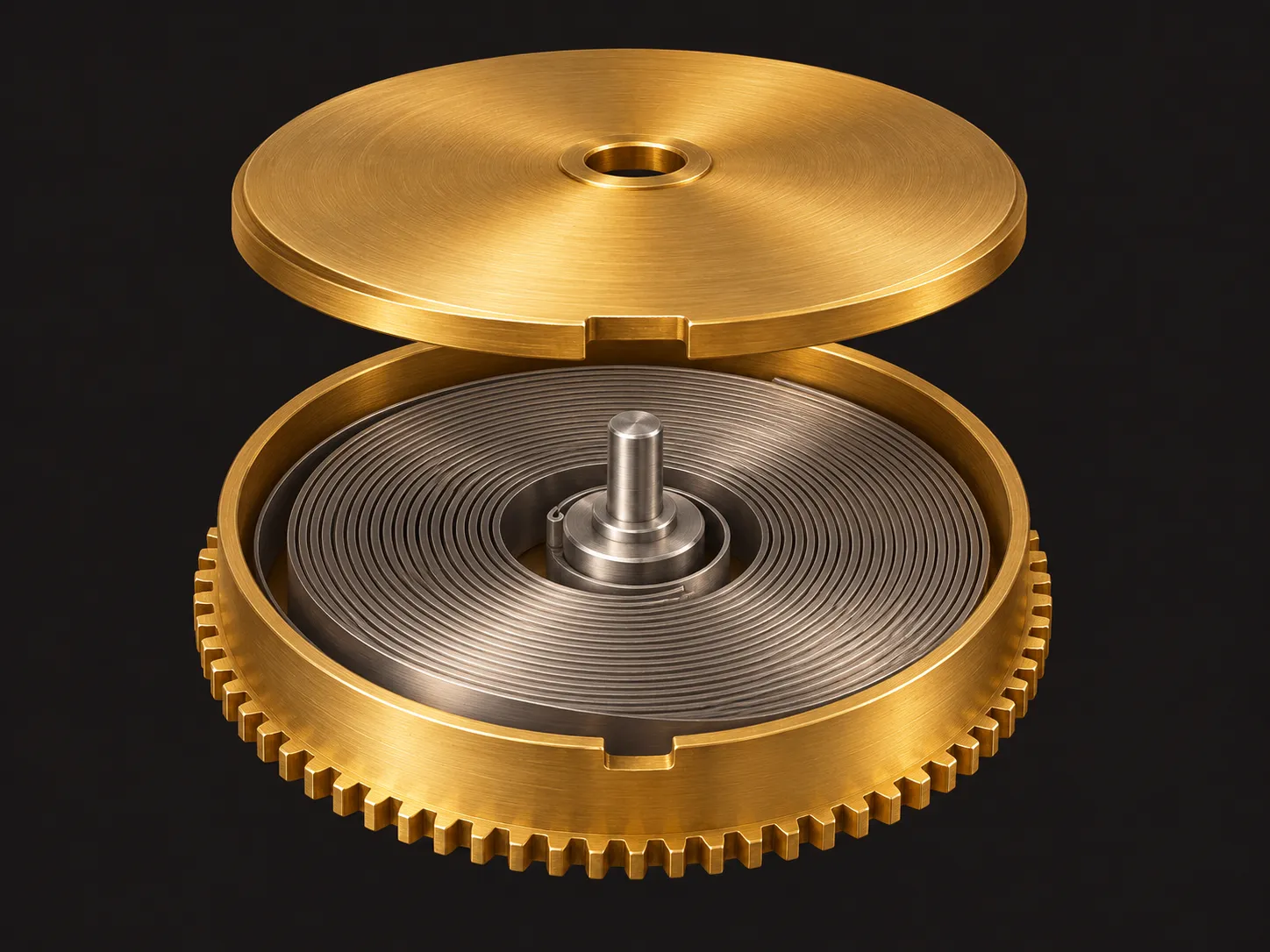
Barrel — the mainspring housing
Role: House the mainspring and transmit its stored energy to the gear train.
A toothed drum contains the spring. Winding tensions the mainspring; as it unwinds, energy passes through the barrel to the movement. The lifted lid reveals the spring inside.
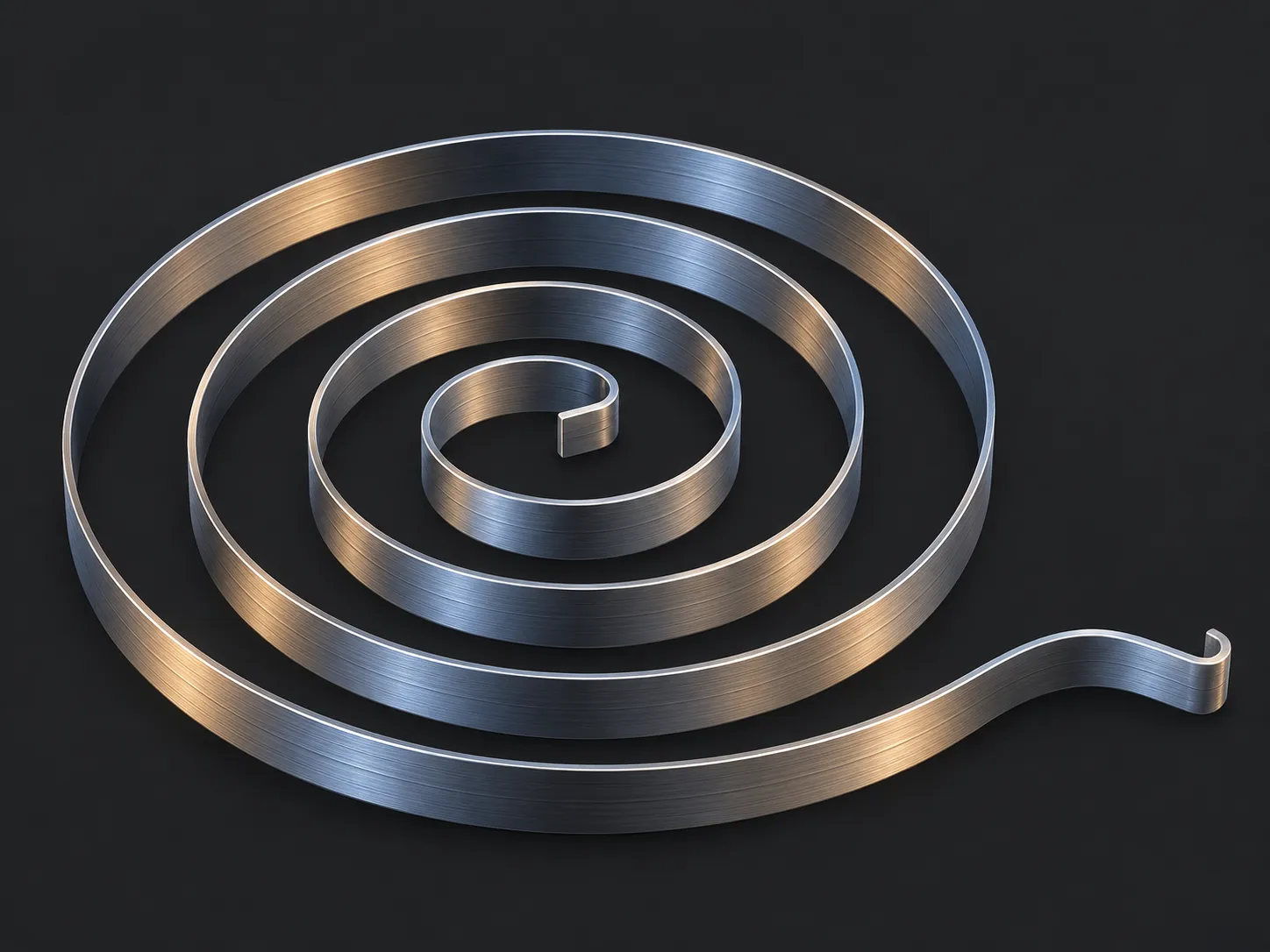
Mainspring
Role: Store the energy that powers a mechanical watch.
A long, flat metal ribbon is usually coiled inside the barrel. Manual or automatic winding tensions it. The barrel is the housing; the mainspring is the energy-storing spring inside it. It should not be confused with the hairspring.
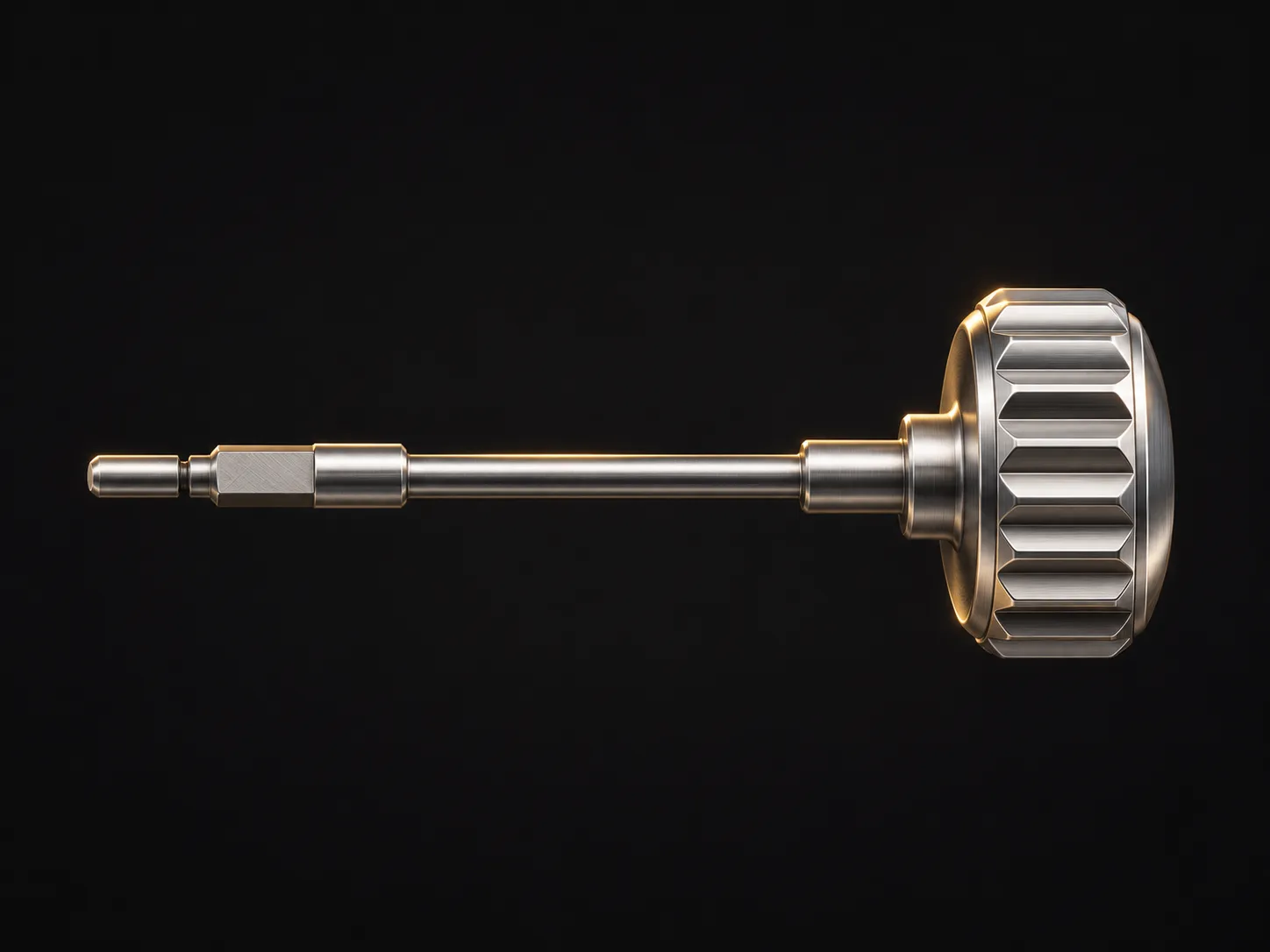
Winding crown and stem
Role: Transmit the wearer’s input to the winding and setting mechanisms.
The external grip is the crown; the slim shaft attached to it is the stem. Through the relevant mechanism, they allow winding and time setting. Date-setting functions and crown positions depend on the model.
Other important components
- Gear train: Transmits energy and produces different rotational speeds.
- Pallet fork and escape wheel: In the common Swiss lever escapement, these deliver timed impulses that sustain the balance’s oscillation.
- Jewels: Usually synthetic ruby bearings used to reduce friction and wear at selected moving points. Jewel count alone does not measure quality.
- Mainplate and bridges: Support the movement’s components and hold their pivots in position.
Calendars and Complications
A complication adds a function beyond basic timekeeping. Calendars, chronographs and second time zones are familiar examples.
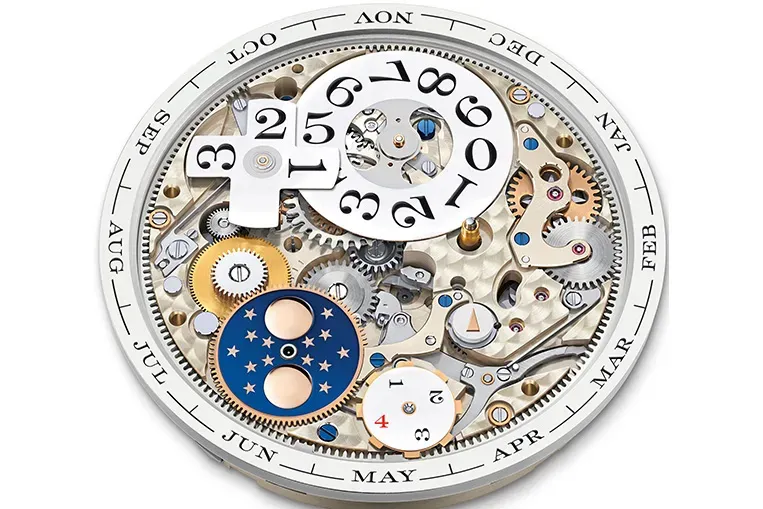
Perpetual calendar
Mechanically follows different month lengths and the four-year leap-year cycle. Conventional examples, correctly set and kept running, handle month-end changes including February. Most traditional systems require a calendar correction in 2100; the specific design of the model matters.
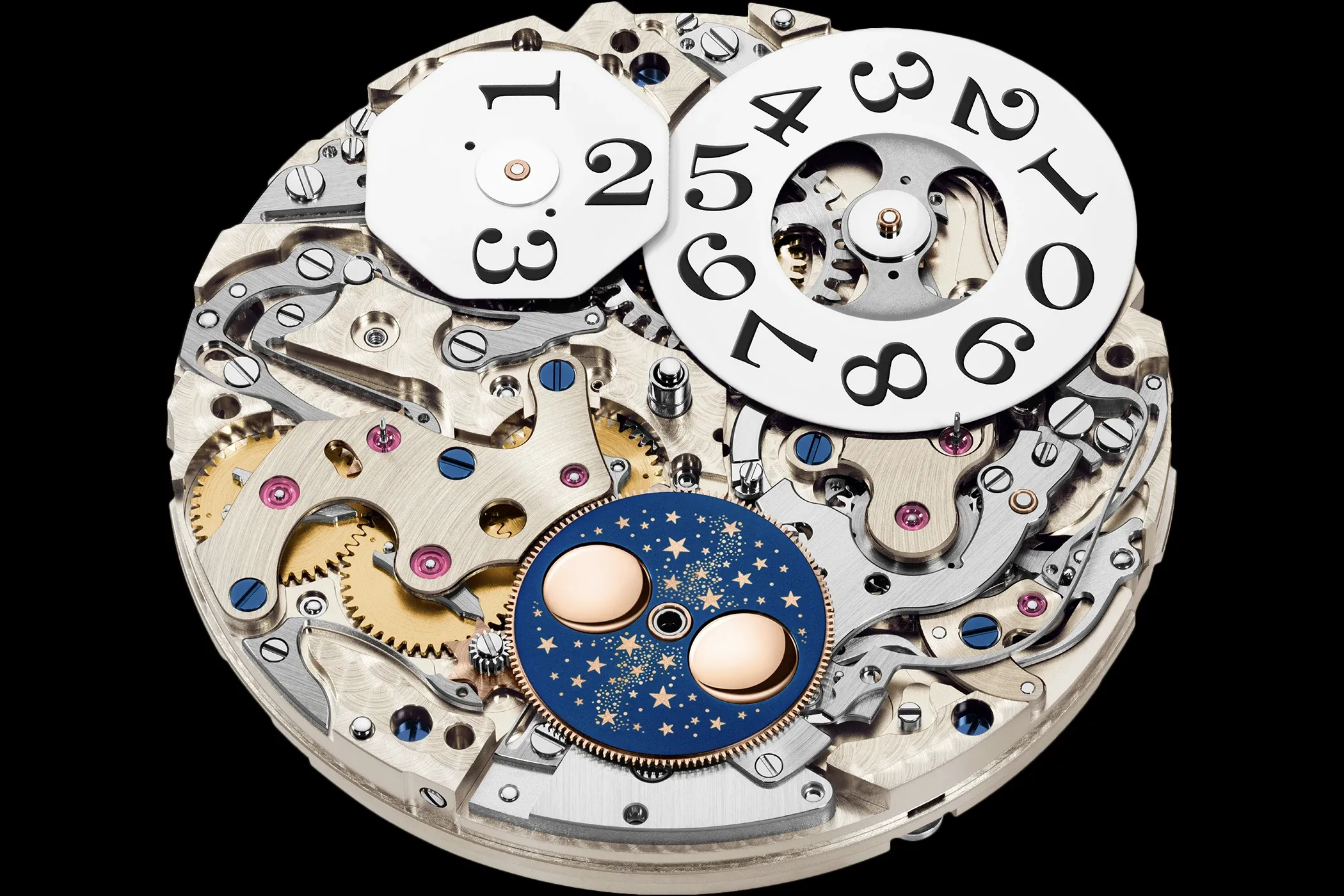
Annual calendar
Distinguishes 30-day and 31-day months, but normally needs one correction at the end of February each year. Unlike a perpetual calendar, it does not fully account for February and leap years automatically.
Keep these separate: Automatic winding describes how a watch is powered; a perpetual calendar describes how its calendar works. If the movement stops, the calendar may need resetting. Always follow the model’s instructions.
Tourbillon
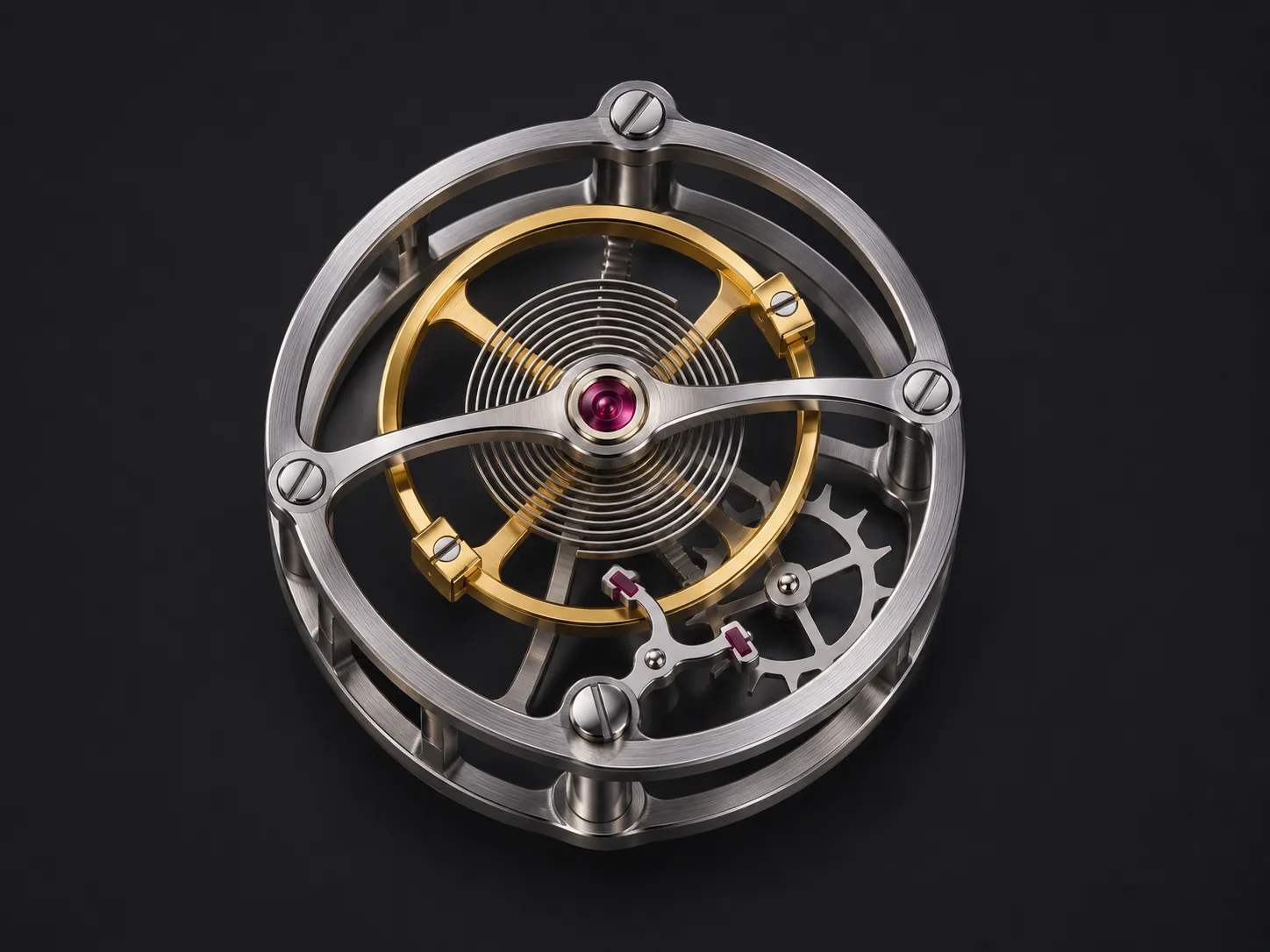
A rotating cage carries the balance and escapement. It was developed to average positional errors caused by gravity when a watch stays upright. Its motion and craftsmanship are compelling, but it should not be read as a guarantee of superior wristwatch accuracy in every condition.
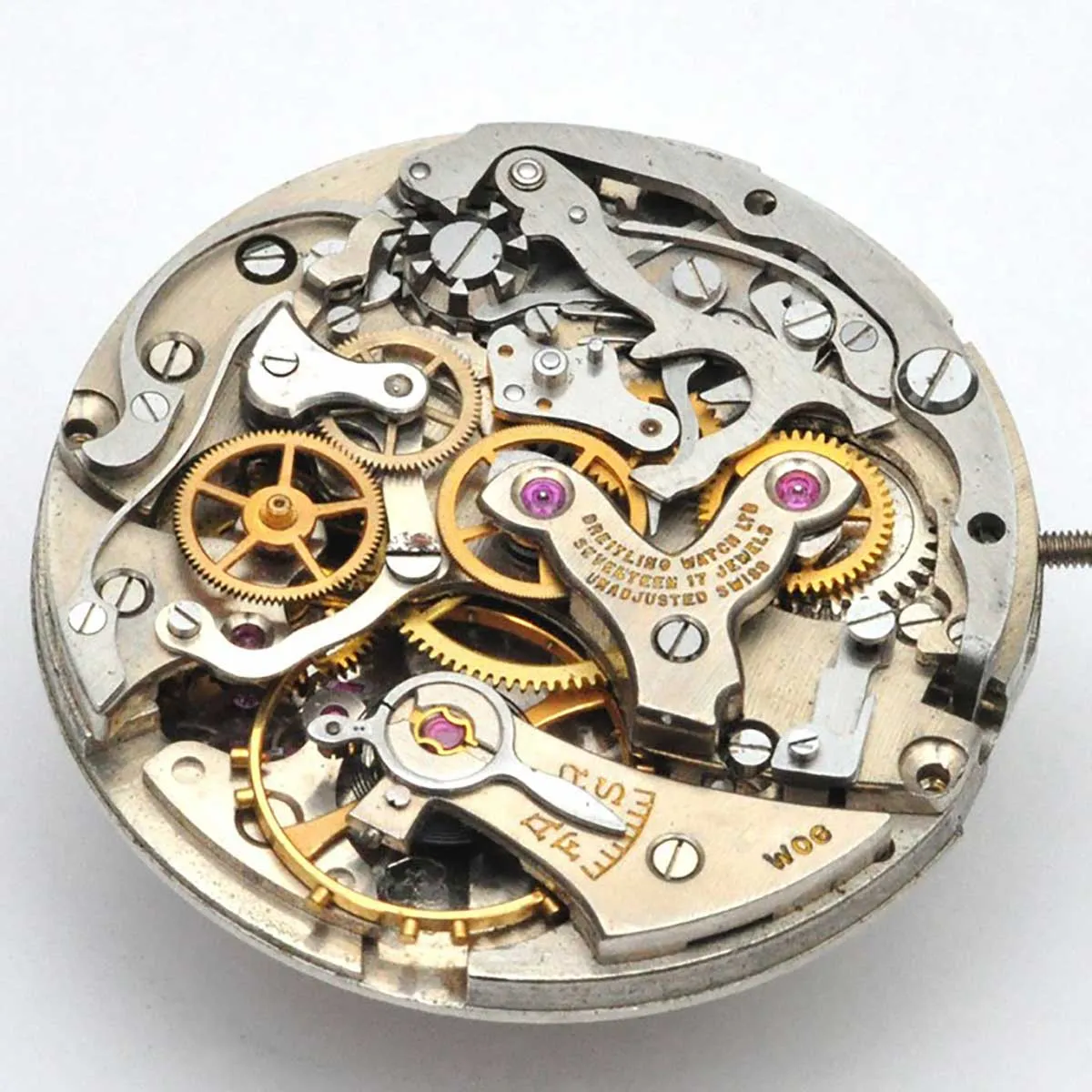
Chronograph
A function that starts, stops and resets an elapsed-time measurement while the watch continues to display the time. Not every small dial is a chronograph counter: it may show a calendar function or running seconds instead.
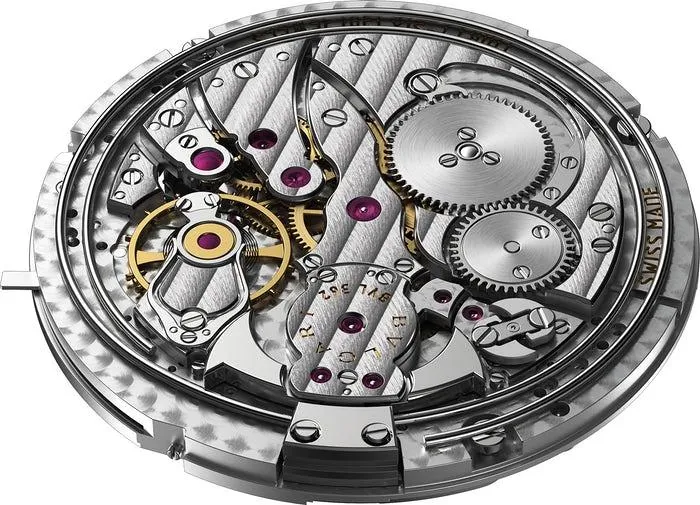
Minute repeater
A complication that sounds the current time on demand. A traditional system strikes the hours, then the quarters, then the minutes elapsed since the last quarter. Small hammers strike gongs to produce the sound. Unlike a chronograph, it announces the current time rather than measuring elapsed time.
Chronograph versus chronometer
A chronograph is an elapsed-time function. Chronometer describes a watch or movement meeting defined precision tests; check the testing body and its applicable standard. A watch can be both a chronograph and a chronometer.
GMT / second time zone
Lets you read another time zone alongside the main display. A common GMT arrangement uses an additional hand against a 24-hour scale. Whether the local hour hand or GMT hand adjusts independently depends on the calibre.
Moon phase
A disc or indicator represents the phases of the Moon. This is different from a day/night display. Accuracy relative to the lunar cycle and the interval between corrections depend on the mechanism.
Visible Craftsmanship
Skeleton / openworked movement
Openings in plates and bridges reveal the movement’s internal structure. A skeleton watch does not necessarily contain a tourbillon. A transparent caseback alone does not make a movement skeletonised.
Rotor
The moving weight that helps wind an automatic watch. Different architectures include full-size rotors, micro-rotors and peripheral rotors. The moving component visible through a display caseback is often the rotor.
Choose With Understanding
Start with how you wear a watch: do you value tracking another time zone, measuring elapsed time or watching the movement at work? Read technical specifications alongside the instructions for the exact reference.
Explore the watch collection · Contact Symbol Watches